

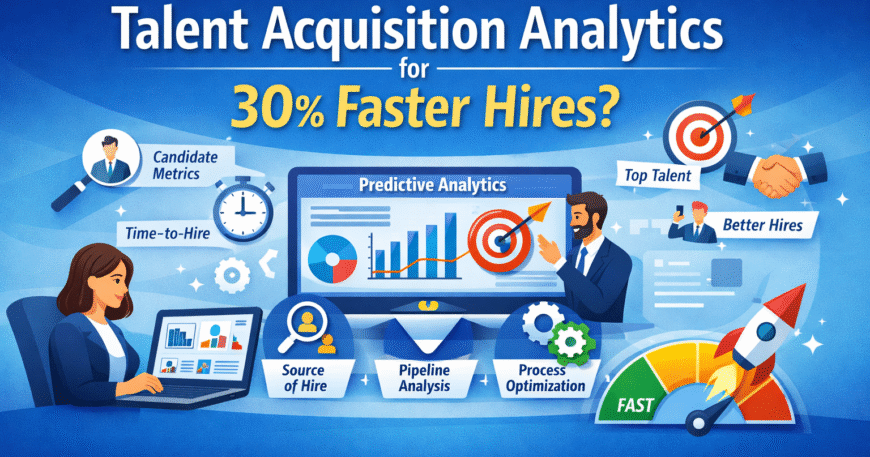
Hiring the right people quickly is one of the biggest challenges companies face today. Many organizations struggle with long hiring cycles, inefficient screening processes, and unclear recruitment priorities. These delays can lead to missed opportunities, productivity gaps, and increased hiring costs.
This is where data becomes a game changer. Companies that use analytics in their hiring decisions can significantly reduce time-to-hire while improving the quality of candidates. When organizations integrate data into their talent acquisition strategy, they can identify hiring bottlenecks, optimize sourcing channels, and make better decisions faster.
In this guide, we explore how talent acquisition analytics can help organizations achieve up to 30% faster hiring outcomes while strengthening their recruitment approach.
Why Data Is Transforming Modern Hiring?
Traditional hiring relied heavily on intuition and manual processes. Recruiters would review resumes, conduct interviews, and select candidates based on experience and judgment.
However, today’s hiring environment is more competitive and data-driven. Organizations now analyze hiring metrics such as time-to-fill, candidate conversion rates, and sourcing effectiveness to improve their talent acquisition strategy.
By using analytics, companies can answer important questions such as:
- Which sourcing channels produce the best candidates?
- Where do candidates drop off in the hiring pipeline?
- Which roles take the longest to fill?
This insight allows recruiters to build a smarter and more effective talent acquisition approach.
What Is Talent Acquisition Analytics?
Talent acquisition analytics refers to the use of data and metrics to improve hiring decisions and recruitment performance. It involves collecting, analyzing, and interpreting hiring data to optimize recruitment outcomes.
When used correctly, talent acquisition analytics can reveal patterns that are not visible through traditional hiring methods.
These insights help organizations improve their talent acquisition strategy by identifying inefficiencies and focusing resources on the most effective hiring channels.
For example, analytics can show whether job boards, employee referrals, or recruitment agencies deliver the highest-quality candidates.
Key Metrics That Drive Faster Hiring
To accelerate hiring, organizations must track the right metrics. These data points provide visibility into the recruitment pipeline and highlight opportunities for improvement.
Time-to-Fill
Time-to-fill measures how long it takes to close a job position from the moment it is opened. Monitoring this metric helps organizations refine their talent acquisition strategy by identifying roles or departments where hiring delays occur.
Time-to-Hire
Time-to-hire tracks how long it takes from candidate application to job offer acceptance. Reducing this metric improves candidate experience and strengthens the overall talent acquisition process.
Source of Hire
This metric identifies which recruitment channels deliver the most successful hires. Companies can then focus on channels that support their strategies for talent acquisition and reduce spending on less effective platforms.
Candidate Conversion Rate
Conversion rate measures how many candidates move from one hiring stage to the next. Analyzing this data helps recruiters adjust screening methods and improve their talent acquisition strategy.
Identifying Bottlenecks in the Hiring Pipeline
One of the biggest advantages of analytics is the ability to uncover hidden inefficiencies.
Many organizations experience delays in stages such as resume screening, interview scheduling, or offer approvals. These bottlenecks can slow down hiring significantly.
By analyzing hiring data, recruiters can pinpoint where candidates spend the most time in the pipeline. This allows companies to redesign workflows and improve their talent acquisition strategy.
For example:
- Automating resume screening can reduce recruiter workload.
- Structured interviews can speed up decision-making.
- Faster offer approvals can prevent candidate drop-offs.
These improvements help organizations achieve effective talent acquisition strategies that reduce hiring delays.
Using Predictive Analytics to Identify Top Talent
Predictive analytics uses historical hiring data to forecast future recruitment outcomes. This approach allows companies to identify candidate profiles that are most likely to succeed in specific roles.
Organizations using predictive insights can build a more proactive talent acquisition strategy.
For example, analytics can reveal patterns such as:
- Which universities produce high-performing hires
- Which skills correlate with long-term employee success
- Which interview questions predict strong performance
This type of strategic talent acquisition helps companies hire faster while improving employee retention.
Improving Candidate Experience with Data
Candidate experience plays a critical role in successful hiring. A slow or confusing recruitment process can cause top candidates to lose interest.
Analytics helps organizations monitor candidate engagement and optimize their talent acquisition strategy.
For example, data can reveal:
- How long candidates wait between interview rounds
- Which stages cause the most drop-offs
- Whether job descriptions attract the right applicants
With these insights, companies can design smoother workflows and build a more responsive talent acquisition program that attracts high-quality candidates.
Aligning Recruitment with Business Goals
Hiring should always support long-term business objectives. Analytics helps organizations align their talent acquisition strategy with workforce planning and growth goals.
For example, if a company plans to expand its engineering department, data can help recruiters predict future hiring needs and build talent pipelines in advance.
This approach is especially important when developing the best talent acquisition strategies for tech teams, where competition for skilled professionals is extremely high.
By using data to anticipate hiring needs, companies can move from reactive recruiting to proactive workforce planning.
Building a Data-Driven Talent Acquisition Strategy
Organizations looking to implement analytics in hiring should start with a structured approach. A clear talent acquisition strategy framework ensures that data supports decision-making rather than creating unnecessary complexity.
Here are key steps for building a talent acquisition strategy powered by analytics.
1. Define Clear Hiring Objectives
Start by identifying the outcomes you want to achieve, such as reducing time-to-hire, improving candidate quality, or lowering recruitment costs.
2. Track the Right Recruitment Metrics
Focus on measurable indicators like time-to-fill, candidate pipeline health, and sourcing efficiency.
3. Use Technology to Centralize Data
Applicant tracking systems and recruitment platforms help consolidate hiring data and provide actionable insights.
4. Continuously Optimize Hiring Processes
Use data insights to refine interview methods, improve job descriptions, and adjust sourcing strategies.
Following these steps helps organizations develop a strong talent acquisition strategy that delivers faster and more reliable hiring results.
Creating a Culture of Data-Driven Recruiting
Analytics tools alone cannot transform hiring outcomes. Organizations must also develop a culture that values data-driven decision-making.
Recruiters, HR leaders, and hiring managers should regularly review recruitment metrics and collaborate to improve hiring outcomes.
This culture supports the development of modern pillars of talent acquisition, including:
- Data-driven recruitment
- Candidate-centric hiring
- Strategic workforce planning
- Continuous hiring process improvement
When companies embrace these principles, their talent acquisition strategy becomes more agile and effective.
Conclusion
Hiring speed and quality are critical competitive advantages in today’s talent-driven economy. Organizations that rely solely on traditional recruitment methods often struggle with long hiring cycles and inconsistent results.
By leveraging analytics, companies gain visibility into their recruitment pipeline, identify inefficiencies, and make smarter hiring decisions. Data-driven insights help organizations optimize sourcing channels, improve candidate experience, and refine their talent acquisition strategy.
When implemented effectively, analytics can reduce hiring timelines by up to 30% while improving candidate quality and workforce planning.
Organizations looking to design data-driven hiring systems can benefit from research-backed insights and expert guidance. These insights from ResearchFox can also help strengthen their talent acquisition strategy and build smarter, faster, and future-ready recruitment frameworks.
Frequently Asked Questions:
What is talent acquisition analytics?
Talent acquisition analytics involves using recruitment data and metrics to improve hiring decisions. It helps organizations optimize their talent acquisition strategy, identify hiring bottlenecks, and make faster, more informed recruitment choices.
How can analytics help reduce time-to-hire?
Analytics identifies delays in the recruitment pipeline such as slow screening or interview scheduling. By addressing these issues, companies can streamline processes and significantly reduce hiring timelines.
What are the most important metrics in talent acquisition analytics?
Key metrics include time-to-fill, time-to-hire, source of hire, candidate conversion rate, and offer acceptance rate. These indicators help recruiters measure hiring efficiency and improve their overall recruitment performance.
Why is data important in a modern talent acquisition strategy?
Data provides insights into what works and what does not in recruitment. It helps organizations allocate resources to the most effective channels and continuously improve their hiring processes.
How does analytics improve candidate experience?
Analytics tracks candidate engagement and identifies stages where applicants drop out. This helps organizations simplify processes, communicate faster, and create a smoother recruitment journey.
Can talent acquisition analytics improve quality of hire?
Yes. By analyzing candidate performance data and hiring patterns, companies can identify traits and sources that produce successful employees, leading to better hiring decisions.
What tools are commonly used for talent acquisition analytics?
Organizations typically use applicant tracking systems (ATS), HR analytics platforms, recruitment dashboards, and AI-powered hiring tools to collect and analyze recruitment data effectively.
How can companies start building a data-driven talent acquisition strategy?
Companies can start by defining hiring goals, tracking key recruitment metrics, using digital recruitment tools, and regularly reviewing data insights to refine and improve their hiring approach.


