

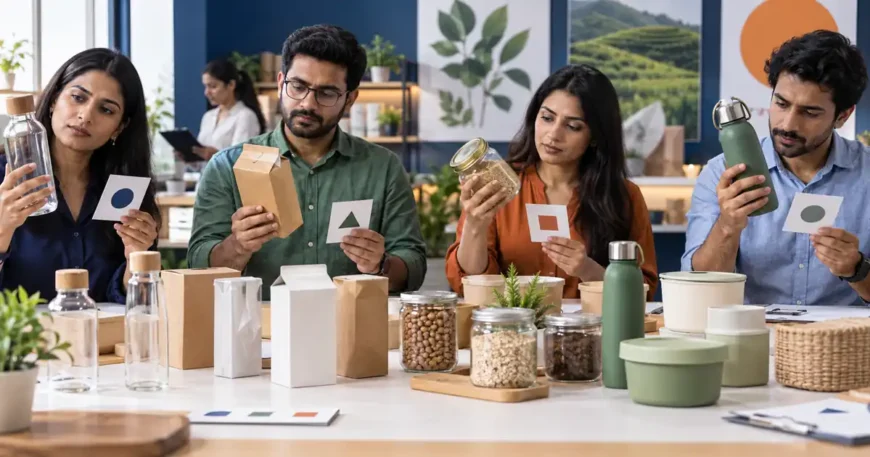
Consumers may say they prefer sustainable packaging, yet choose a conventional pack when the alternative costs more, feels less convenient or creates doubt about product protection. This difference between stated support and real purchase behaviour is the central challenge for food, beverage and consumer brands.
Sustainable packaging research must therefore test more than whether people like an environmental idea. It should determine whether the pack communicates clearly, protects the product, fits routines, builds trust and creates enough value to influence choice.
What Does Sustainable Packaging Mean to Consumers?
The term may refer to recyclable, reusable, refillable, compostable, lightweight or reduced-material packaging. Consumers do not always interpret these claims consistently. A material that appears natural may be assumed to be sustainable even when disposal is difficult. A technically recyclable pack may fail if local collection systems cannot process it.
Research should first learn which cues consumers notice and what they believe those cues mean. This protects brands from designing around internal or technical definitions that shoppers do not understand.
Why Packaging Attitudes Do Not Always Predict Purchase
People evaluate several benefits at once. In food and beverages, safety, freshness, leakage protection, shelf life, convenience and price may outweigh environmental concern.
The attitude-behaviour gap becomes larger when:
- The sustainable option costs noticeably more
- Disposal instructions are unclear
- The material feels weak or unfamiliar
- The pack is difficult to open, carry, store or reseal
- Environmental claims appear vague
- The product is bought quickly with limited comparison
Market research should recreate realistic decisions instead of asking only whether sustainability is important.
A Research Framework For Sustainable Packaging
1. Define the packaging decision
Specify whether the team is selecting a material, comparing designs, testing claims, measuring price tolerance or preparing for launch. Each decision requires different evidence.
2. Understand the usage journey
Map how consumers discover, select, transport, open, use, store and dispose of the pack. Interviews and observation can reveal friction that a visual concept test misses.
For beverages, consider portability, temperature, resealing, spills and on-the-go disposal. For household products, consider dosing, storage and repeated handling.
3. Identify relevant audiences and occasions
Sustainability does not have equal importance for every consumer or purchase. Segment respondents by category usage, purchase occasion, environmental involvement, price sensitivity and channel.
Customer segmentation research can distinguish high-intent sustainability audiences from consumers who express support but prioritise convenience or value.
4. Test comprehension and credibility
Measure what consumers believe the pack and its claims mean. Ask them to explain symbols or instructions in their own words before showing definitions.
Useful measures include:
- Claim comprehension
- Perceived environmental benefit
- Trust and believability
- Expected product protection
- Disposal confidence
- Brand fit
- Perceived greenwashing risk
5. Compare alternatives realistically
Use monadic testing when each participant should evaluate one pack independently. Use sequential monadic or paired comparisons when the decision requires direct trade-offs.
Include the current pack and credible competitors where appropriate. A competitor analysis framework helps identify the claims, formats and price cues shoppers already encounter.
6. Measure behaviour and willingness to pay
Purchase intent alone can overstate demand. Add choice exercises, simulated shelves, price ladders or conjoint methods to reveal trade-offs.
Test whether consumers choose the pack when:
- The sustainable option costs the same
- A modest premium is introduced
- Convenience changes
- The claim is explained
- A competing product offers stronger functional benefits
7. Run an in-use test
Home-use tests reveal whether the pack performs in real conditions. Participants can record opening, pouring, storage, leakage, product freshness and disposal.
The guide to market research survey questions can help connect every question with an action rather than collecting general reactions.
8. Link results to launch decisions
Translate evidence into clear choices about material, design, communication, price and target audience. Separate changes required before launch from ideas that can be monitored later.
Research Methods For Packaging Decisions
Qualitative interviews
Use interviews to explore language, beliefs, routines and concerns. They are valuable when the format or material is unfamiliar.
Focus groups
Use groups to compare category expectations and discuss claims, but avoid treating consensus as proof of purchase.
Shelf and visual testing
Use shelf tests to measure visibility, recognition and communication in a competitive context.
Central-location and home-use tests
Use central-location tests for controlled comparison and home-use tests for real-world performance.
Choice modelling
Use conjoint or discrete-choice methods when teams need to estimate trade-offs among price, material, convenience and product benefits.
Sustainable Packaging Mistakes Brands Should Avoid
- Treating recyclability as automatically understood
- Testing the pack without the product and price
- Assuming environmental concern equals willingness to pay
- Ignoring local disposal infrastructure
- Using claims that consumers cannot verify
- Measuring first impressions without in-use experience
- Selecting respondents based only on demographics
- Launching nationally without testing regional or channel differences
How Market Research Improves Packaging Decisions
Research can prevent a brand from solving one problem while creating another. A lighter pack may reduce material but feel less protective. A refill system may reduce waste but require storage and effort. A compostable format may sound attractive but create disposal confusion.
The objective is not to make consumers choose sustainability at any cost. It is to design an option where environmental value works with safety, convenience, trust and price.
Turning Research Into a Packaging Brief
The final output should be usable by design, product, procurement and marketing teams. Record the priority audience, functional requirements, sustainability cues, claims, price boundaries and unresolved risks in one decision brief.
Separate non-negotiable requirements from preferences. Product protection, regulatory compliance and safety should not be traded against visual appeal. Consumer preferences can then guide choices among technically viable alternatives.
When evidence differs by audience, avoid averaging the result into one generic pack. The brand may need a different format, size, channel strategy or explanation for a priority segment.
Brands running local pilots can work with a market research company in Bangalore to recruit relevant consumers and test packaging across usage occasions. ResearchFox’s market research case studies also show how consumer evidence supports product and growth decisions.
Conclusion
Sustainable packaging wins when it works for the consumer, the product and the disposal system. Market research helps brands identify the claims people understand, the trade-offs they accept and the performance standards they will not compromise.
ResearchFox supports packaging, concept and product testing for brands preparing to launch or improve consumer products. Share the packaging decision through the ResearchFox contact page.
Frequently Asked Questions
How do consumers evaluate sustainable packaging?
Consumers balance environmental benefit with price, safety, freshness, durability, convenience and disposal confidence.
How can brands test willingness to pay?
Brands can use price ladders, choice exercises, conjoint analysis or simulated purchase tasks rather than relying only on direct questions.
What is the best method for packaging research?
The method depends on the decision. Concept tests measure early reactions, shelf tests assess visibility and home-use tests evaluate performance.
Why is sustainable packaging sometimes rejected?
Consumers may reject it when it costs more, feels less protective, reduces convenience or uses claims they do not trust.
Should packaging be tested regionally?
Yes. Climate, retail formats, category habits and disposal systems can change how packaging is used and understood.


