

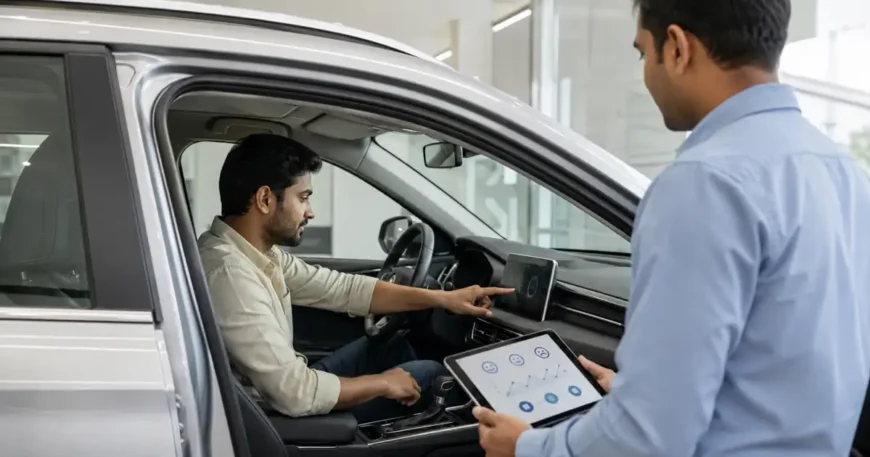
Customer centricity in the automotive industry means organising product, retail, digital and service decisions around evidence of customer needs across the complete ownership journey. It is more than being polite at a dealership or sending a satisfaction survey after service.
A customer-centric automotive company understands how buyers form a consideration set, which features create value, where dealership experiences fail, how digital services fit daily driving and what makes an owner stay with the brand. Market research turns those questions into evidence that product, sales, service and partner teams can use.
This guide presents a practical research framework for automotive OEMs, mobility businesses, dealers, service networks and technology providers.
What is customer centricity in the automotive industry?
Customer centricity is a management approach in which customer evidence influences strategy, product development, processes, metrics and resource allocation. In automotive, it covers the relationship before, during and after a vehicle purchase.
Customer satisfaction is one outcome within that system. A company can record a high score at one touchpoint and still be difficult to deal with across the journey. Customer centricity asks whether the organisation consistently understands needs, removes friction and creates value across product, finance, delivery, connected services, maintenance and repurchase.
Why automotive customer experience is becoming more complex
The traditional journey was often described as advertising, dealership visit, test drive, purchase and service. Today, buyers may move repeatedly between search engines, comparison platforms, videos, social content, dealer calls, configurators, finance tools and physical experiences.
Vehicles are also becoming connected service environments. A 2024 IBM study based on interviews with 1,230 automotive executives across nine countries reported that 75 percent of respondents expected the software-defined experience to become central to brand value by 2035. This is an executive expectation, not a consumer forecast, but it shows why automotive customer research must cover software, data and ongoing services as well as the physical vehicle.
The customer may also interact with several organisations under one brand promise. Dealers, lenders, insurers, charging networks, roadside-assistance providers, software partners and service centres can each affect the experience. A failure at a partner handoff is still experienced by the customer as part of the vehicle relationship.
A six-stage automotive customer research framework
Stage 1: Digital discovery and consideration
Research should identify how buyers enter the category, which questions they ask and what causes a brand to enter or leave the consideration set. Useful methods include search-journey interviews, digital diaries, online behaviour analysis and surveys with recent buyers and intenders.
ResearchFox’s digital-footprint research study examined automotive information sources, search behaviour, digital advertisements, content consumption and timing. The case demonstrates that digital influence is not one touchpoint. Different sources can serve awareness, comparison, reassurance and final validation.
Key questions include which content is trusted, which specifications are misunderstood, what information is missing and whether online promises match dealership reality.
Stage 2: Product and proposition evaluation
Customer-centric product research measures trade-offs, not only feature popularity. Buyers may like a large screen but prefer a lower price, better visibility or simpler controls. A feature can perform differently by segment, use case or region.
Automotive clinics, central location tests, focus groups, usability studies, MaxDiff and conjoint can help compare design, features, price and positioning. The method should reflect the development stage. Early concepts need exploratory learning, while near-final alternatives may require structured comparison.
Stage 3: Dealership and test-drive experience
The dealership is where product interest meets availability, staff behaviour, finance and operational reality. Journey mapping should be based on observed or recent experiences rather than internal assumptions.
A ResearchFox three-wheeler mystery-shopping study assessed 15 dealerships across passenger and commercial-vehicle enquiries. Shoppers used predefined parameters, photographs and observations to identify performance differences and critical touchpoints.
Mystery shopping is useful for process compliance, but it should be combined with real-customer research. A mystery shopper can test whether a protocol is followed; a buyer can explain whether the interaction created confidence and met the need.
Stage 4: Purchase, finance and delivery
The purchase stage includes quotation clarity, model availability, waiting periods, trade-in, finance, insurance, documentation and handover. Research should measure both effort and confidence.
Ask customers to recall specific events rather than rate the entire purchase generally. Which information changed, which commitment was unclear and which delay mattered? Pair surveys with complaint and process data so teams can distinguish isolated frustration from a recurring operational failure.
Stage 5: Ownership, connected services and maintenance
The ownership experience determines whether the product promise survives daily use. Research can cover reliability, charging or fuel experience, mobile applications, infotainment, over-the-air updates, service booking, diagnosis, repair transparency, parts availability and roadside support.
The current ISO 10004 standard provides guidance for defining and implementing processes to monitor and measure customer satisfaction. For automotive programmes, a practical system should combine transactional feedback after important events with periodic relationship research and operational measures.
Stage 6: Loyalty, renewal and advocacy
Loyalty should be examined as behaviour and intent. Repurchase, service retention, referral and brand consideration can move in different directions. An owner may recommend the vehicle but use an independent workshop, or remain with the service network while considering a different brand next time.
A ResearchFox commercial-vehicle service loyalty study used more than 150 telephonic interviews and in-depth discussions to understand service-centre challenges and test a loyalty-programme concept. The case shows why a loyalty offering should be researched with the people expected to use it before full implementation.
What do customer-focused partnerships look like in the auto industry?
Customer-focused partnerships connect organisations to solve a customer need that no participant can deliver alone. Examples can include OEM and charging-network coordination, lender and dealer finance journeys, insurer and connected-vehicle services, roadside support, infotainment ecosystems and service-parts logistics.
The partnership becomes customer-centric only when it improves the experience and clarifies responsibility. A logo alliance is not enough.
Market research should test the partnership at four levels
- Need Whether customers value the combined offering
- Journey Whether the handoff between partners is understandable
- Trust Whether data use, payment and responsibility are clear
- Delivery Whether the experience works consistently in real situations
The Search Console query auto industry partnerships with customer-focused offerings suggests that users want practical examples of how partnership creates value. The answer is that the partnership should remove a verified pain point, preserve a coherent experience and assign ownership when something fails.
How market research makes an automotive strategy customer-centric
Build a single evidence architecture
Combine sales, service, complaints, digital behaviour, dealer audits and primary research in one decision framework. Do not confuse a dashboard with insight. The team still needs agreed definitions, comparable segments and a process for turning evidence into action.
Segment by need and use case
Demographics alone may not explain vehicle choice. Segment research can include daily distance, household use, cargo or passenger needs, parking, charging access, technology confidence, finance preference and service expectations.
Include lost and excluded customers
Research only with current owners creates survivorship bias. Include buyers who rejected the brand, cancelled a booking, left the authorised service network or could not access the product. Their evidence can reveal barriers hidden from satisfaction surveys.
Close the loop visibly
Customers are more likely to participate when feedback leads to a credible response. Define who owns each issue, the action threshold and how the change will be communicated. Do not promise individual resolution through a research survey unless the process supports it.
Protect research quality
Verify recent purchase or service experience, balance important segments and separate dealer-managed invitation lists from independently recruited samples where possible. If staff select only happy customers, the programme will overstate performance.
The metrics that matter across the automotive journey
No single score captures customer centricity. A balanced framework can include consideration, test-drive conversion, quote clarity, purchase effort, delivery accuracy, feature usability, service retention, repeat repair, complaint resolution, digital adoption, repurchase consideration and referral.
Use metrics as signals for investigation. A falling recommendation score does not reveal the cause. Driver analysis, open-ended feedback and qualitative follow-up can identify which experience changed and for whom.
A practical research cadence for automotive teams
Continuous transactional feedback can monitor high-volume touchpoints such as delivery and service. Quarterly or half-yearly relationship research can assess broader loyalty and brand experience. Product clinics and buyer-journey studies should run around development and launch decisions, while mystery shopping can check execution at defined intervals.
The cadence should match how quickly the decision can change. Collecting feedback monthly is wasteful if the organisation reviews it once a year. Research governance should define the owner, action window and escalation route before data collection begins.
How ResearchFox supports automotive customer research
ResearchFox combines buyer-journey research, product clinics, feature evaluation, mystery shopping, customer satisfaction and loyalty research. Explore our automotive market research capabilities, customer experience research and consumer research services.
Our SUV buyer decision journey study used group interviews and A/B testing with recent buyers and intenders to examine brand consideration, features and online influence.
Conclusion
Customer centricity in the automotive industry is a research and operating discipline. It requires evidence across digital discovery, product evaluation, dealerships, purchase, ownership, service and repurchase. It also requires partners to deliver one coherent experience even when several organisations are involved.
The goal is not to maximise one satisfaction score. It is to understand which needs matter, where the journey fails, which trade-offs customers accept and what action will improve value for both customer and business.
If your team needs to evaluate an automotive journey, product, dealer network or service experience, a market research company in Bangalore can design research around the decision and audience. Share your automotive research brief to discuss feasibility, methods and decision-ready outputs.
Frequently asked questions
What is customer centricity in the automotive industry?
It is an approach in which customer evidence shapes product, sales, service, digital and partnership decisions across the ownership journey. It goes beyond one touchpoint or satisfaction score.
How is automotive customer experience measured?
Use a combination of transactional surveys, relationship studies, qualitative interviews, mystery shopping, operational data and behaviour. Measures can include effort, trust, satisfaction, resolution, service retention and repurchase consideration.
What is the role of market research in automotive customer centricity?
Market research identifies needs, maps journeys, tests products and communications, measures experiences and explains the reasons behind behavioural patterns. It helps teams prioritise changes using customer evidence rather than internal opinion.
Why are dealerships important to a customer-centric strategy?
Dealerships connect the product promise with human interaction, availability, finance, test drives and delivery. Inconsistent execution can weaken trust even when the vehicle itself is well received.
How can automotive partnerships become more customer-focused?
Start with a verified customer problem, design the complete handoff, clarify data and payment responsibilities, test the joint proposition and assign ownership for failure. Partnership value should be measured through customer outcomes, not only commercial activity.
Which customers should be included in automotive research?
Include recent buyers, intenders, rejected brands, cancelled bookings, current owners, lapsed service customers and relevant ecosystem partners. The exact mix should follow the business decision.


