

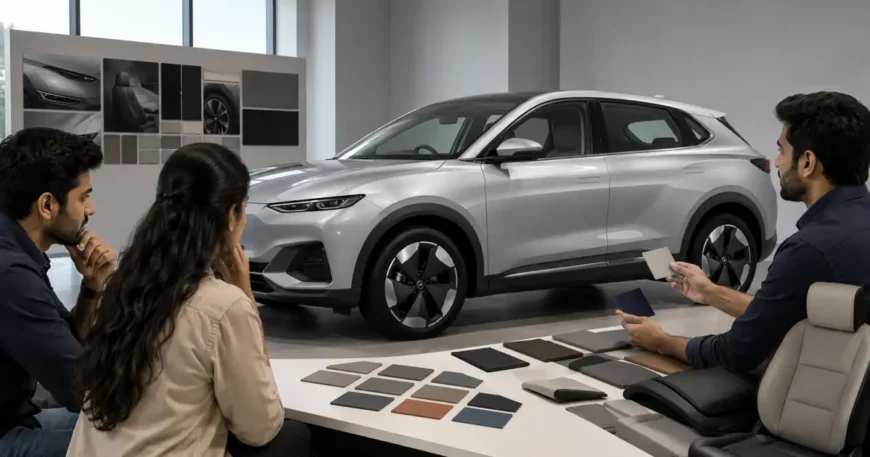
Vehicle design influences consumer buying decisions by shaping attention, emotion, perceived quality, brand recognition and expectations of usability. It can move a model into the consideration set or cause immediate rejection. It rarely acts alone.
Buyers evaluate design alongside price, safety, reliability, performance, technology, comfort, finance, service and brand confidence. The research challenge is therefore not to ask whether design matters. It is to identify which design cues matter to which buyers, how they interact with functional attributes and whether preference remains when realistic trade-offs are introduced.
This guide explains what the evidence says and how automotive market research can test vehicle aesthetics without confusing visual appeal with a purchase decision.
What is vehicle design in consumer research?
Vehicle design includes visible and experienced elements of the exterior, interior and interface. Exterior research can cover proportion, silhouette, front and rear identity, lighting, grille, wheel design, colour, surface treatment and perceived stance. Interior research can cover layout, space, materials, colour, seat experience, storage, controls, displays and interaction.
Design research also examines meaning. The same feature may signal sportiness, safety, premium quality, practicality or unfamiliarity to different buyers. An aesthetic choice succeeds commercially when it creates the intended meaning for the target segment without weakening usability, brand fit or value.
What does research say about vehicle aesthetics and purchase decisions?
Several studies support a relationship between automotive aesthetics and consumer response, but their contexts and methods differ.
A 2020 study based on 388 respondents in Romania reported positive relationships between aesthetic dimensions including colour, shape and sound and purchase decisions. The authors explicitly encouraged testing the framework in other cultures, so the result should not be treated as a universal estimate.
A 2022 randomised online study in Japan changed the light-reflection brightness of vehicle exteriors while holding other elements constant. Higher reflection brightness increased purchase intention for the tested SUVs but not for compact cars. The practical implication is not that brighter always sells. It is that colour, material and finish should fit the product concept and category expectation.
A 2024 study authored by researchers from IIT Ropar examined visual and non-visual factors in automobile design. It highlighted visual cues such as curves, grille and colour alongside reliability, quality and ergonomics. This reinforces a central market research principle: design needs to be evaluated with the functional and emotional context of the vehicle.
A 2026 study using 1,576 valid questionnaires from dealerships of nine EV brands in China found that the relationship between cabin spatial aesthetics and brand positioning was associated with purchase intention, particularly in the studied safety-oriented and luxury segments. The geography and model mean that Indian OEMs should test the mechanism locally rather than copy the result.
The consistent lesson is that design can influence choice, but the effect is conditional on segment, vehicle type, brand, functional expectations and research context.
How exterior design affects first consideration
Exterior styling often creates the first fast judgement. Proportion, stance, lighting and front identity can make a vehicle look robust, agile, premium, friendly or practical before specifications are examined.
This initial response matters because buyers do not evaluate every available model. Design can act as a filter that determines which vehicles receive further attention. However, strong distinctiveness can help or hurt. A design that is too familiar may disappear in the category, while one that is too unfamiliar may create rejection or uncertainty.
Research published in the Journal of Marketing using 202 car models found that consumer preference peaked at moderate levels of segment prototypicality and brand consistency in the studied market. This suggests that commercial design may need a balance between recognition and novelty rather than maximum difference.
How interior design shapes perceived quality and usability
The interior becomes more influential when buyers sit in the vehicle, take a test drive or imagine daily use. Materials, fit, storage, seating, visibility, screen placement and control logic contribute to perceived quality.
Visual appeal can also change expectations of usability. A clean interface may look easy before use but hide essential controls. A complex dashboard may signal technology while increasing cognitive load. Product research should therefore combine appearance measures with tasks, comprehension and observed interaction.
For connected vehicles, screen design and software behaviour are part of the cabin experience. A car infotainment clinic and focus group study conducted by ResearchFox used a car clinic, focus groups and video capture to assess shortlisted infotainment systems. The case shows why customers should experience the design in context rather than judge isolated screenshots.
Why design preference differs across customer segments
Aesthetic preference is not one national average. It can vary by age, household, geography, vehicle ownership, body type, usage, status motivation, technology confidence and familiarity with the brand.
Fleet and delivery users may prioritise durability, access, load handling and ease of repair, while a private buyer may place more weight on identity, comfort or digital experience. Even within one audience, stated liking may not predict purchase if the preferred design conflicts with budget or use.
ResearchFox’s two-wheeler EV product design study involved 24 participants across delivery roles in two metros. The qualitative work assessed a prototype’s feasibility, relevance, must-haves, delight factors and design problems in real operational context. The study identified issues in the design philosophy before launch decisions advanced.
The lesson is that target users should be defined by the decision and use case, not recruited as a generic group of vehicle owners.
A seven-step market research framework for vehicle design
Step 1: Define the design decision
Specify what can still change. The question may involve two front-end themes, cabin layouts, colours, material finishes, feature placement or a near-final prototype. Research is less useful when stakeholders ask for broad feedback after design decisions are already locked.
Step 2: Recruit the correct audience
Include category intenders, recent buyers, rejecters and relevant owners. Verify purchase horizon, budget, use case and decision influence. If a model targets delivery fleets, recruit operators and managers as well as riders.
Step 3: Create controlled stimuli
Compare designs at equivalent fidelity. One option should not have better lighting, rendering or specification detail than another. When testing a single element, hold other cues constant where possible.
Early sketches can explore direction, while virtual reality, full-scale models, static clinics and drivable prototypes answer later-stage questions. The stimulus should match the decision.
Step 4: Explore meaning qualitatively
Use interviews or groups to understand spontaneous reactions, metaphors, associations and rejection. Ask what the design communicates, who it appears to be for and which situations it fits. Avoid explaining the intended theme before recording the participant’s interpretation.
Step 5: Validate preference quantitatively
Measure appeal, distinctiveness, brand fit, perceived quality, usability expectation and consideration. Use randomised order and appropriate monadic or sequential exposure. Include diagnostic measures so the team knows why one design performs differently.
A ResearchFox two-wheeler EV product design testing study combined 200 telephonic interviews with central location testing of an EV prototype. The research examined tangible and intangible elements and purchase drivers among individual and fleet owners.
Step 6: Introduce realistic trade-offs
After measuring clean design response, test choice with price, range, features, performance or brand. MaxDiff, conjoint or discrete-choice methods can estimate trade-offs when the design and sample are suitable.
Do not conclude that the most liked design will sell best until it survives realistic constraints. Buyers may prefer an expensive design but choose a slightly less appealing option with stronger value.
Step 7: Connect research to development
Translate findings into design priorities, acceptable ranges and segment implications. Record what evidence supports, what remains uncertain and which change needs another test. Preserve the connection between the consumer response and the specific stimulus version.
What should an automotive design study measure?
A robust scorecard can include spontaneous appeal, uniqueness, modernity, brand recognition, segment fit, perceived price, perceived quality, comfort expectation, usability expectation, safety impression, consideration, rejection and willingness to pay.
The measures should follow the decision. If the team needs to choose digital features, a two-wheeler EV feature-ranking study can be more relevant than an overall styling score. ResearchFox used a blend of online and offline interaction with 56 prospective buyers to rank desired EV add-on benefits in that case.
Open-ended evidence also matters. A small difference in average appeal may conceal a strong rejection cue in a commercially important segment.
Common mistakes in vehicle aesthetics research
- Asking Only whether participants like a design
- Recruiting Current owners when the target is new-category intenders
- Comparing Stimuli with different levels of finish or information
- Showing One design so there is no meaningful reference
- Explaining The design intention before recording spontaneous interpretation
- Ignoring Price, function, brand and service trade-offs
- Treating Purchase intent as a sales forecast
- Reporting Averages without segment differences or rejection
- Changing Several design elements and attributing the result to one
How design research supports a stronger business decision
Good automotive design research can reduce the risk of advancing a rejected theme, identify improvements before tooling, clarify segment differences and connect styling with positioning. It can also reveal when the problem is not aesthetics but value, usability or brand credibility.
The research should not override design expertise. It should give designers and decision-makers evidence about how intended users perceive and use the product. The strongest outcome is a productive conversation between design intent, engineering constraints, commercial strategy and consumer evidence.
ResearchFox combines product clinics, concept testing, qualitative research, quantitative validation and buyer-journey studies. Explore our automotive market research capabilities and product concept testing in Bangalore for related approaches.
Conclusion
Vehicle design influences consumer buying decisions through attention, emotion, perceived quality, usability expectations and brand meaning. Its effect is real but conditional. A design that works for one segment, body type or brand position may not work for another.
Automotive market research should therefore test who responds, what the design communicates, which element creates the response and whether preference remains when price and function are introduced. Controlled stimuli, correct recruitment and realistic trade-offs are essential.
If your team is comparing design themes, testing a prototype or prioritising vehicle features, a market research company in Bangalore can build the study around the development decision. Share your automotive product-research brief to discuss clinics, concept testing and validation.
Frequently asked questions
How important is vehicle design in a car purchase?
Design can affect initial attention, consideration, perceived quality and emotional fit. Final choice also depends on price, safety, reliability, performance, features, finance, service and brand. The relative importance should be measured for the target segment.
Which vehicle design elements influence consumers?
Relevant elements can include proportion, shape, lighting, grille, colour, surface finish, wheels, cabin layout, materials, seating, storage and interfaces. Their meaning varies by vehicle type and customer.
What is an automotive product clinic?
An automotive product clinic is a controlled research setting where target participants evaluate a vehicle, prototype or competing products. It can combine observation, tasks, interviews and structured ratings.
Can online images replace a physical car clinic?
Online stimuli can test early visual directions efficiently, but they cannot fully reproduce scale, material, seating, visibility, touch and interaction. The method should match the design stage and decision risk.
How do researchers test vehicle design without bias?
Use equivalent stimuli, randomised order, neutral questions, verified participants and consistent exposure. Separate spontaneous response from explained features and introduce realistic trade-offs after the clean design evaluation.
Does the most attractive vehicle design always sell best?
No. Aesthetic appeal can increase consideration, but buyers trade design against price, function, safety, reliability and brand. Research should test preference within a realistic choice rather than treat an appeal score as a sales forecast.


